


S A N
Administrators
-
Joined
-
Last visited
-
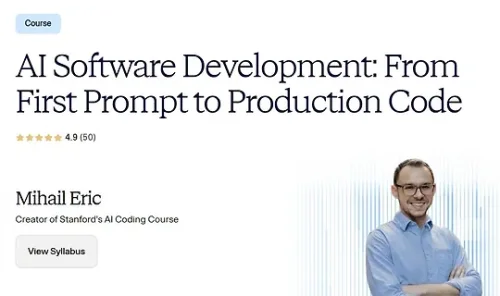
AI Software Development: From First Prompt to Production Code File Name: AI Software Development: From First Prompt to Production Code Content Source: https://maven.com/the-modern-software-developer/ai-course Genre / Category: Coding Courses Language: ENGLISH Original Price: $999 ABOUT THE COURSE: This practical course will help developers, team leads, and engineers move from the occasional use of AI tools to full-fledged AI-first development , speeding up the release of functionality and improving code quality. The foundation of the program is based on real work experience with Stanford, Y Combinator, and engineering teams at Amazon. About the CourseThe program is focused on integrating AI assistants and agent systems into daily development processes—not in theory, but through real production-level scenarios. You will learn to design solutions, write and test code, conduct reviews, and maintain high development quality using modern AI tools. What You Will LearnAI-first Approach to DevelopmentProper task setting and forming working prompts. Progression through the cycle "research → planning → implementation → testing → review" with the participation of AI agents. Working with production cases, not training examples. Building an Effective AI Development EnvironmentSetting up IDE and tools for AI-oriented work. Integrating assistants into the existing technological stack. Organizing safe and predictable code generation. Quality Control and Process AutomationCreating CI/CD pipelines for detecting errors and hallucinations before entering production. Forming requirements and checks for AI-generated code. Working with testing, linters, and automated reviews. Orchestrating AI AgentsCollaborative work of multiple assistants on a single code base. Avoiding conflicts, loss of context, and degradation of code quality. Designing workflows involving teams of agents. Developing Your Own AI ToolsCreating AI agents for specific company tasks. Developing MCP servers and integrating with platforms like Cursor and Claude Code. Understanding the internal mechanisms of modern AI systems. Outcomes of the CourseAfter completing the training, you will be able to significantly speed up development, enhance code stability and predictability, and establish workflows where artificial intelligence truly boosts team productivity. Graduates of the course: create and deliver software products faster; effectively manage and configure AI agents; significantly reduce the number of errors and defects; build a modern engineering culture with AI at the center of development. Who This Course Is ForThe course is suitable for developers aiming to improve their work with AI code, technical leads, engineering managers, and all specialists who want to master modern methods of AI-first software development. File Information Submitter S A N Submitted 07/26/2026 Category Paid Coding Courses Sale page https://maven.com/the-modern-software-developer/ai-course View File
-
File Name: AI Software Development: From First Prompt to Production Code Content Source: https://maven.com/the-modern-software-developer/ai-course Genre / Category: Coding Courses Language: ENGLISH Original Price: $999 ABOUT THE COURSE: This practical course will help developers, team leads, and engineers move from the occasional use of AI tools to full-fledged AI-first development , speeding up the release of functionality and improving code quality. The foundation of the program is based on real work experience with Stanford, Y Combinator, and engineering teams at Amazon. About the CourseThe program is focused on integrating AI assistants and agent systems into daily development processes—not in theory, but through real production-level scenarios. You will learn to design solutions, write and test code, conduct reviews, and maintain high development quality using modern AI tools. What You Will LearnAI-first Approach to DevelopmentProper task setting and forming working prompts. Progression through the cycle "research → planning → implementation → testing → review" with the participation of AI agents. Working with production cases, not training examples. Building an Effective AI Development EnvironmentSetting up IDE and tools for AI-oriented work. Integrating assistants into the existing technological stack. Organizing safe and predictable code generation. Quality Control and Process AutomationCreating CI/CD pipelines for detecting errors and hallucinations before entering production. Forming requirements and checks for AI-generated code. Working with testing, linters, and automated reviews. Orchestrating AI AgentsCollaborative work of multiple assistants on a single code base. Avoiding conflicts, loss of context, and degradation of code quality. Designing workflows involving teams of agents. Developing Your Own AI ToolsCreating AI agents for specific company tasks. Developing MCP servers and integrating with platforms like Cursor and Claude Code. Understanding the internal mechanisms of modern AI systems. Outcomes of the CourseAfter completing the training, you will be able to significantly speed up development, enhance code stability and predictability, and establish workflows where artificial intelligence truly boosts team productivity. Graduates of the course: create and deliver software products faster; effectively manage and configure AI agents; significantly reduce the number of errors and defects; build a modern engineering culture with AI at the center of development. Who This Course Is ForThe course is suitable for developers aiming to improve their work with AI code, technical leads, engineering managers, and all specialists who want to master modern methods of AI-first software development.Free
-
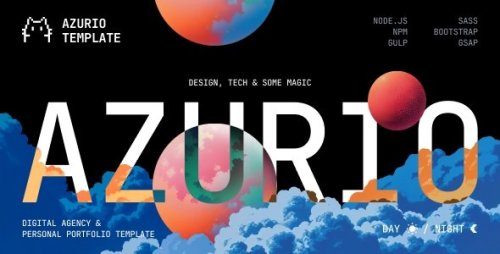
Azurio - Digital Agency & Personal Portfolio HTML Template File Name: Azurio - Digital Agency & Personal Portfolio HTML Template Content Source: https://themeforest.net/item/azurio-digital-agency-personal-portfolio-html-template/62354415 Genre / Category: Codes & Resources Original Price: $24 ABOUT THIS FILE: Azurio template is a perfect solution for everyone who wants to showcase digital services and projects. Design studios, creative agencies, designers, freelancers, developers, software engineers and everyone in the creative field can present their work with clarity and confidence using Azurio template! Bold visuals, trendy design and expressive typography will help your portfolio make a strong and memorable impression. Whether you’re showcasing projects, promoting services, or building a personal brand, Azurio adapts to your content and style. With multiple responsive breakpoints, Azurio looks great on any device. Detailed documentation and friendly support will make Azurio setup quick and easy. Azurio Template Key FeaturesBold visuals & stylish design Modern, eye-catching layouts crafted to make your brand stand out and keep visitors engaged. Dark & light mode Switch effortlessly between light and dark modes for a user-friendly experience. GSAP-powered animations Adding unique movement, scroll magic, and creative depth to your pages. Code excellence Built with clean, well-structured code that’s fast, secure, and easy to maintain. Easy to customize Adapt every detail to fit your vision — no fuss, just simple, clear editing. And much more:Versatile pages collection Smooth scroll with Lenis plugin Functional sections Numerous page elements 10 pre-made home pages Multi-page layout Various portfolio options Blog pages Fully responsive for any device Stylish typography with Google Fonts Custom pixel icons included Phosphor iconic font included Awesome sliders with Swiper Parallax images background Animated headline Stacked sections and sticky layouts Displays perfectly on any screen size Ready to use AJAX contact form Cross browser W3C validated Bootstrap 5 grid system Build with SASS Powered by GULP Clean and organized code Extensive documentation Reliable and regular updates Friendly support Azurio Pages:Branding studio Software development company Creative agency Freelancer portfolio Design studio Web developer Personal portfolio Digital agency Web studio Digital designer Works default Works grid Works grid sticky Project details Blog standard Blog creative Single post About me About us Services Our team Pricing plans Contact FAQ 404 error What’s inside?Ready-to-use HTML template with all supporting CSS, JS and other files GULP project for total customization Template documentation File Information Submitter S A N Submitted 07/26/2026 Category Codes & Resources Sale page https://themeforest.net/item/azurio-digital-agency-personal-portfolio-html-template/62354415 View File
-
File Name: Azurio - Digital Agency & Personal Portfolio HTML Template Content Source: https://themeforest.net/item/azurio-digital-agency-personal-portfolio-html-template/62354415 Genre / Category: Codes & Resources Original Price: $24 ABOUT THIS FILE: Azurio template is a perfect solution for everyone who wants to showcase digital services and projects. Design studios, creative agencies, designers, freelancers, developers, software engineers and everyone in the creative field can present their work with clarity and confidence using Azurio template! Bold visuals, trendy design and expressive typography will help your portfolio make a strong and memorable impression. Whether you’re showcasing projects, promoting services, or building a personal brand, Azurio adapts to your content and style. With multiple responsive breakpoints, Azurio looks great on any device. Detailed documentation and friendly support will make Azurio setup quick and easy. Azurio Template Key FeaturesBold visuals & stylish design Modern, eye-catching layouts crafted to make your brand stand out and keep visitors engaged. Dark & light mode Switch effortlessly between light and dark modes for a user-friendly experience. GSAP-powered animations Adding unique movement, scroll magic, and creative depth to your pages. Code excellence Built with clean, well-structured code that’s fast, secure, and easy to maintain. Easy to customize Adapt every detail to fit your vision — no fuss, just simple, clear editing. And much more:Versatile pages collection Smooth scroll with Lenis plugin Functional sections Numerous page elements 10 pre-made home pages Multi-page layout Various portfolio options Blog pages Fully responsive for any device Stylish typography with Google Fonts Custom pixel icons included Phosphor iconic font included Awesome sliders with Swiper Parallax images background Animated headline Stacked sections and sticky layouts Displays perfectly on any screen size Ready to use AJAX contact form Cross browser W3C validated Bootstrap 5 grid system Build with SASS Powered by GULP Clean and organized code Extensive documentation Reliable and regular updates Friendly support Azurio Pages:Branding studio Software development company Creative agency Freelancer portfolio Design studio Web developer Personal portfolio Digital agency Web studio Digital designer Works default Works grid Works grid sticky Project details Blog standard Blog creative Single post About me About us Services Our team Pricing plans Contact FAQ 404 error What’s inside?Ready-to-use HTML template with all supporting CSS, JS and other files GULP project for total customization Template documentationFree
-
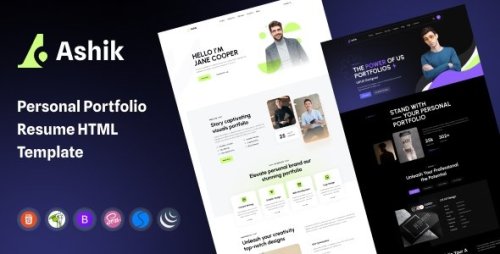
Ashik - Personal Portfolio HTML Template (Source Code) File Name: Ashik - Personal Portfolio HTML Template (Source Code) Content Source: https://themeforest.net/item/ashik-personal-portfolio-html-template/56581341 Genre / Category: Codes & Resources Original Price: $7 ABOUT THIS FILE: Ashik is a creative & unique Portfolio Resume specifically created for the developer, designer, programmer, freelancer, writer, artist, web developer, photographer, or any other digital professional. We believe – we have covered everything you need to set up a Personal Portfolio or Resume website but if there is something that you would like to know then we are happy to help you out. Features OverviewBootstrap 5.x Framework: Bootstrap is the most popular HTML, CSS, and JS framework for developing responsive, mobile-first projects on the web. Responsive Layout Design: Whatever you are using the device your site will run as it should be. The Ashik template is the fully responsive layout for all types of devices Awesome Blog Pages: Blogging is essential! We designed beautiful blog page templates and custom single blog styles for your news and updates. Template FeaturesUnique Homepage Version W3C Validated HTML5 & CSS3 Coding Flat, modern and clean design Unique effects and functionality Built With Bootstrap 5 Dark Mood and multiple animation Fully Responsive Pixel Perfect Design Easy To Customize Cross-browser Compatible Font Awesome Pro Icon Font Well Documented And Much More Resources Credits:Bootstrap jQuery SwiperSlider GSAP Animation Magnific Popup Fontawesome Pro jQuery Isotope jQuery counterup File Information Submitter S A N Submitted 07/26/2026 Category Codes & Resources Sale page https://themeforest.net/item/ashik-personal-portfolio-html-template/56581341 View File
-
File Name: Ashik - Personal Portfolio HTML Template (Source Code) Content Source: https://themeforest.net/item/ashik-personal-portfolio-html-template/56581341 Genre / Category: Codes & Resources Original Price: $7 ABOUT THIS FILE: Ashik is a creative & unique Portfolio Resume specifically created for the developer, designer, programmer, freelancer, writer, artist, web developer, photographer, or any other digital professional. We believe – we have covered everything you need to set up a Personal Portfolio or Resume website but if there is something that you would like to know then we are happy to help you out. Features OverviewBootstrap 5.x Framework: Bootstrap is the most popular HTML, CSS, and JS framework for developing responsive, mobile-first projects on the web. Responsive Layout Design: Whatever you are using the device your site will run as it should be. The Ashik template is the fully responsive layout for all types of devices Awesome Blog Pages: Blogging is essential! We designed beautiful blog page templates and custom single blog styles for your news and updates. Template FeaturesUnique Homepage Version W3C Validated HTML5 & CSS3 Coding Flat, modern and clean design Unique effects and functionality Built With Bootstrap 5 Dark Mood and multiple animation Fully Responsive Pixel Perfect Design Easy To Customize Cross-browser Compatible Font Awesome Pro Icon Font Well Documented And Much More Resources Credits:Bootstrap jQuery SwiperSlider GSAP Animation Magnific Popup Fontawesome Pro jQuery Isotope jQuery counterupFree
-
Matt pocock - AI SDK v6 Crash Course File Name: Matt pocock - AI SDK v6 Crash Course Content Source: https://www.aihero.dev/workshops/ai-sdk-v6-crash-course Genre / Category: Coding Courses Language: ENGLISH Original Price: $149 ABOUT THE COURSE: 100% TypeScript. 100% Production-ready. 0% hype. Only real tools and experience. Integration with LLM has finally reached a new level - now it's truly worth your time. Just a year ago, development for LLM was real chaos: hacks, unstable APIs, outdated interfaces, and endless reworks. Now everything is different - thanks to the AI SDK. AI SDK v6 changes the game: Write once - works with any LLM-provider. Modern patterns and tools instead of homemade solutions. Production-ready, secure, and elegant TypeScript code. If you've been waiting for stable APIs, production-ready tools, and clear architectural patterns - the moment has come. In this intensive course, you will learn how to add LLM-based features to your TypeScript applications. The course includes 89 short videos and 57 practical exercises across 10 modules. Everything is as practical, dynamic, and concise as possible. You will master: Basic principles of LLM (tokens, context, windows, etc.) Key architectural patterns: agents, workflows, tool-calling, and much more Production tools: observability, logging, error handling Eval-Driven Development - an approach to combat model hallucinations And, of course, everything about how to effectively use AI SDK v6 Projects you will create during the course: Chat title generator with a dataset for eval Workflow for generating and enhancing messages in Slack Guardrail to protect your application Request router capable of sending simple tasks to cheaper models Exploratory agent for information searching on the web All videos are short (2–3 minutes), exercises are easy yet comprehensive - you can learn even with a busy schedule. AI SDK v6 is not just a library. It's a unified engineering platform that saves months of development, simplifies maintenance, and makes your AI applications as reliable as the rest of your code. More than 3.5 million downloads per week - and it's not by chance: Fully open source (Apache 2.0) Supports all major frameworks and LLMs Unified interface for all models and providers Easy integration with OpenTelemetry, Langfuse, Braintrust, and other tools Works everywhere: Node, Deno, Bun AI SDK v6 makes LLM application development as modern as everything else in TypeScript. It's time to join in - and start creating smart, production-ready features. File Information Submitter S A N Submitted 07/23/2026 Category Paid Coding Courses Sale page https://www.aihero.dev/workshops/ai-sdk-v6-crash-course View File

-
File Name: Matt pocock - AI SDK v6 Crash Course Content Source: https://www.aihero.dev/workshops/ai-sdk-v6-crash-course Genre / Category: Coding Courses Language: ENGLISH Original Price: $149 ABOUT THE COURSE: 100% TypeScript. 100% Production-ready. 0% hype. Only real tools and experience. Integration with LLM has finally reached a new level - now it's truly worth your time. Just a year ago, development for LLM was real chaos: hacks, unstable APIs, outdated interfaces, and endless reworks. Now everything is different - thanks to the AI SDK. AI SDK v6 changes the game: Write once - works with any LLM-provider. Modern patterns and tools instead of homemade solutions. Production-ready, secure, and elegant TypeScript code. If you've been waiting for stable APIs, production-ready tools, and clear architectural patterns - the moment has come. In this intensive course, you will learn how to add LLM-based features to your TypeScript applications. The course includes 89 short videos and 57 practical exercises across 10 modules. Everything is as practical, dynamic, and concise as possible. You will master: Basic principles of LLM (tokens, context, windows, etc.) Key architectural patterns: agents, workflows, tool-calling, and much more Production tools: observability, logging, error handling Eval-Driven Development - an approach to combat model hallucinations And, of course, everything about how to effectively use AI SDK v6 Projects you will create during the course: Chat title generator with a dataset for eval Workflow for generating and enhancing messages in Slack Guardrail to protect your application Request router capable of sending simple tasks to cheaper models Exploratory agent for information searching on the web All videos are short (2–3 minutes), exercises are easy yet comprehensive - you can learn even with a busy schedule. AI SDK v6 is not just a library. It's a unified engineering platform that saves months of development, simplifies maintenance, and makes your AI applications as reliable as the rest of your code. More than 3.5 million downloads per week - and it's not by chance: Fully open source (Apache 2.0) Supports all major frameworks and LLMs Unified interface for all models and providers Easy integration with OpenTelemetry, Langfuse, Braintrust, and other tools Works everywhere: Node, Deno, Bun AI SDK v6 makes LLM application development as modern as everything else in TypeScript. It's time to join in - and start creating smart, production-ready features.Free
-
[2026] Complete AWS Bedrock Generative AI Course + Projects File Name: [2026] Complete AWS Bedrock Generative AI Course + Projects Content Source: https://www.udemy.com/course/complete-aws-bedrock-generative-ai-course-projects/ Genre / Category: Premium courses Password: Click Here to Reveal Password Original Price: $49 Language: ENGLISH For Paid User Without URL Shortener: Download : GO TO SINGLE CLICK DOWNLOAD PAGE ABOUT THE COURSE: AWS Bedrock is Amazon Web Services' fully managed platform for building Generative AI applications. It lets you work with powerful foundation models while abstracting away infrastructure complexity. This course will take you from zero to building production-ready AI applications — even if you're completely new to Generative AI. Projects will integrate AWS Bedrock with API Gateway, AWS Lambda, S3, AgentCore, Postman, and other essential AWS services. 6 Real-World Projects You'll Build Meeting Summarization — Feed transcripts into a Bedrock-powered pipeline and get structured summaries with key decisions and action items Code Generation — Describe what you need in plain English, get working code back using foundation models on Bedrock Image Generation — Generate and control images using diffusion models via AWS Bedrock Intelligent Multi-Agent System — A hotel & restaurant recommender where Supervisor, Hotel, and Restaurant agents collaborate to deliver personalized results Voice-Powered Hotel Front Desk AI Agent — Real-time voice AI using AWS Bedrock Nova Sonic that listens, thinks, and responds Web Search Agent with Memory — A personal assistant built with AWS Strands Agents and Claude that searches the web via DuckDuckGo and remembers users across sessions What You'll Learn AWS Bedrock & Generative AI Foundations Understand what AWS Bedrock is, how it fits into the Generative AI ecosystem, and how modern AI applications are built using managed foundation models — explained in a beginner-friendly way. Large Language Models (LLMs) Learn how LLMs work, what they excel at, and where their limitations lie. Explore real-world use cases including document understanding, chat systems, and code generation using Bedrock-hosted models. Fine-Tuning & Reinforcement Fine-Tuning (RFT) Go beyond basic prompting. Learn how models can be improved using fine-tuning and RFT with human feedback, when and why to use these techniques, and how they fit into modern AI workflows. Prompt Management & Optimization Design, manage, version, and optimize prompts for consistent, reliable results. Learn why prompt management becomes critical as applications scale and evolve. Intelligent Model Routing Discover how to route requests intelligently between different models based on task type, cost, or quality — choosing the right model at the right time. Batch Inference & Data Automation Process large volumes of data efficiently using batch inference, and automate document and data workflows using AWS Bedrock for scalable AI processing. Image Generation with Diffusion Models Explore image generation concepts using diffusion models — including how to generate, control, and deploy image-based AI features at scale. AI Safety, Evaluation & Watermark Detection Evaluate your LLMs for quality, accuracy, and toxicity. Understand AI safety concepts including watermark detection and responsible AI usage. Serverless Deployment & Scaling Deploy Generative AI applications using a fully serverless stack — AWS Lambda, API Gateway, S3, and Bedrock — and scale AI applications without managing any servers. AgentCore: From Prototype to Production Take your agents beyond local development. Learn what Amazon Bedrock AgentCore is, deploy agents on AgentCore Runtime, and monitor every tool call and decision with built-in observability — no servers to manage, production-ready from day one. Agent Memory — Short-Term & Long-Term Give your agents the ability to remember. Implement short-term memory using get_last_k_turns so agents track conversation context within a session. Then add long-term memory with extraction strategies that automatically capture semantic facts, user preferences, and session summaries — so your agents personalize every interaction, even across sessions. Guardrails & Responsible AI Learn how to use Amazon Bedrock Guardrails to add safety controls, filter harmful content, reduce risk, and enforce responsible AI behavior across your applications. Model Comparison Compare different foundation models based on quality, speed, cost, capabilities, and use case fit so you can choose the right model for each task. AWS Model Usage Quotas Understand AWS Bedrock model usage quotas, request limits, throttling, and how quotas affect real-world production applications. Inference Profiles Learn how inference profiles work in Amazon Bedrock and how they help with scalable, reliable, and cross-region model invocation. Marketplace Models on AWS Bedrock Explore Amazon Bedrock Marketplace Models and learn how to access additional foundation models beyond the default Bedrock catalog. Advanced Bedrock Features Go beyond basic prompting and deployment by working with more production-focused AWS Bedrock capabilities used in real AI systems. By the End of This Course, You Will Be Able To: Build and deploy Generative AI applications using AWS Bedrock Summarize documents and extract key decisions with AI pipelines Generate text, code, and images using foundation models Improve model behaviour with fine-tuning and reinforcement fine-tuning Manage and optimize prompts at scale Route requests intelligently between models Run batch inference jobs for large datasets Evaluate and monitor LLM outputs for safety and quality Deploy scalable, serverless AI systems on AWS Build intelligent multi-agent AI systems Create real-time voice AI agents using AWS Bedrock Nova Sonic Deploy agents to production on AgentCore Runtime Add short-term and long-term memory to agents Build web search agents with Strands, Claude Haiku, and DuckDuckGo File Information Submitter S A N Submitted 07/23/2026 Category Courses Sale page https://www.udemy.com/course/complete-aws-bedrock-generative-ai-course-projects/ View File
-
 File Name: [2026] Complete AWS Bedrock Generative AI Course + Projects Content Source: https://www.udemy.com/course/complete-aws-bedrock-generative-ai-course-projects/ Genre / Category: Premium courses Password: Click Here to Reveal Password Original Price: $49 Language: ENGLISH For Paid User Without URL Shortener: Download : GO TO SINGLE CLICK DOWNLOAD PAGE ABOUT THE COURSE: AWS Bedrock is Amazon Web Services' fully managed platform for building Generative AI applications. It lets you work with powerful foundation models while abstracting away infrastructure complexity. This course will take you from zero to building production-ready AI applications — even if you're completely new to Generative AI. Projects will integrate AWS Bedrock with API Gateway, AWS Lambda, S3, AgentCore, Postman, and other essential AWS services. 6 Real-World Projects You'll Build Meeting Summarization — Feed transcripts into a Bedrock-powered pipeline and get structured summaries with key decisions and action items Code Generation — Describe what you need in plain English, get working code back using foundation models on Bedrock Image Generation — Generate and control images using diffusion models via AWS Bedrock Intelligent Multi-Agent System — A hotel & restaurant recommender where Supervisor, Hotel, and Restaurant agents collaborate to deliver personalized results Voice-Powered Hotel Front Desk AI Agent — Real-time voice AI using AWS Bedrock Nova Sonic that listens, thinks, and responds Web Search Agent with Memory — A personal assistant built with AWS Strands Agents and Claude that searches the web via DuckDuckGo and remembers users across sessions What You'll Learn AWS Bedrock & Generative AI Foundations Understand what AWS Bedrock is, how it fits into the Generative AI ecosystem, and how modern AI applications are built using managed foundation models — explained in a beginner-friendly way. Large Language Models (LLMs) Learn how LLMs work, what they excel at, and where their limitations lie. Explore real-world use cases including document understanding, chat systems, and code generation using Bedrock-hosted models. Fine-Tuning & Reinforcement Fine-Tuning (RFT) Go beyond basic prompting. Learn how models can be improved using fine-tuning and RFT with human feedback, when and why to use these techniques, and how they fit into modern AI workflows. Prompt Management & Optimization Design, manage, version, and optimize prompts for consistent, reliable results. Learn why prompt management becomes critical as applications scale and evolve. Intelligent Model Routing Discover how to route requests intelligently between different models based on task type, cost, or quality — choosing the right model at the right time. Batch Inference & Data Automation Process large volumes of data efficiently using batch inference, and automate document and data workflows using AWS Bedrock for scalable AI processing. Image Generation with Diffusion Models Explore image generation concepts using diffusion models — including how to generate, control, and deploy image-based AI features at scale. AI Safety, Evaluation & Watermark Detection Evaluate your LLMs for quality, accuracy, and toxicity. Understand AI safety concepts including watermark detection and responsible AI usage. Serverless Deployment & Scaling Deploy Generative AI applications using a fully serverless stack — AWS Lambda, API Gateway, S3, and Bedrock — and scale AI applications without managing any servers. AgentCore: From Prototype to Production Take your agents beyond local development. Learn what Amazon Bedrock AgentCore is, deploy agents on AgentCore Runtime, and monitor every tool call and decision with built-in observability — no servers to manage, production-ready from day one. Agent Memory — Short-Term & Long-Term Give your agents the ability to remember. Implement short-term memory using get_last_k_turns so agents track conversation context within a session. Then add long-term memory with extraction strategies that automatically capture semantic facts, user preferences, and session summaries — so your agents personalize every interaction, even across sessions. Guardrails & Responsible AI Learn how to use Amazon Bedrock Guardrails to add safety controls, filter harmful content, reduce risk, and enforce responsible AI behavior across your applications. Model Comparison Compare different foundation models based on quality, speed, cost, capabilities, and use case fit so you can choose the right model for each task. AWS Model Usage Quotas Understand AWS Bedrock model usage quotas, request limits, throttling, and how quotas affect real-world production applications. Inference Profiles Learn how inference profiles work in Amazon Bedrock and how they help with scalable, reliable, and cross-region model invocation. Marketplace Models on AWS Bedrock Explore Amazon Bedrock Marketplace Models and learn how to access additional foundation models beyond the default Bedrock catalog. Advanced Bedrock Features Go beyond basic prompting and deployment by working with more production-focused AWS Bedrock capabilities used in real AI systems. By the End of This Course, You Will Be Able To: Build and deploy Generative AI applications using AWS Bedrock Summarize documents and extract key decisions with AI pipelines Generate text, code, and images using foundation models Improve model behaviour with fine-tuning and reinforcement fine-tuning Manage and optimize prompts at scale Route requests intelligently between models Run batch inference jobs for large datasets Evaluate and monitor LLM outputs for safety and quality Deploy scalable, serverless AI systems on AWS Build intelligent multi-agent AI systems Create real-time voice AI agents using AWS Bedrock Nova Sonic Deploy agents to production on AgentCore Runtime Add short-term and long-term memory to agents Build web search agents with Strands, Claude Haiku, and DuckDuckGoFree
 -
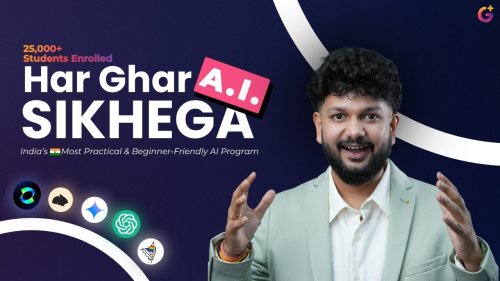
Har Ghar AI Sikhega: 8 Week Complete AI Program in Hindi File Name: Har Ghar AI Sikhega: 8 Week Complete AI Program in Hindi Content Source: https://learn.thegrowthplus.com/web/checkout/690b3e2d900ffbc8a4568bcb Genre / Category: Exclusive courses Language: HINDI Price: ₹2,499 ABOUT THE COURSE: Learn India’s Most Trusted AI Program directly from Naman Deshmukh aka Tech Plus Gadgets⭐ 25,000+ Students | 10M+ Followers The Growth Plus is India’s most respected AI learning platform. Our founder, Naman Deshmukh, is a National Award-winning creator, recognized for impact in AI education. Trusted by 25,000+ learners & brands like Apple, Samsung, and Meta - you’re learning from the best in the country 🇮🇳 🎯 India’s Most Practical and Beginner-Friendly AI Program designed for students, creators, freelancers, marketers, and business owners who want to 💡 What You’ll Learn1️⃣ Introduction to AI Understand the power of Artificial Intelligence and how it’s transforming everyday life. 2️⃣ Master in Prompting Learn the art of writing perfect prompts to get the best results from any AI tool. 3️⃣ Image & Video Generation Using AI Create stunning images and professional videos using the latest AI tools. 4️⃣ Content Creation Using AI Discover how to write, design, and edit viral content for YouTube, Instagram & more. 5️⃣ Grow Your Business with AI Use AI to automate marketing, boost productivity, and scale your business fast. 6️⃣ Build Websites Using AI Build powerful websites using ai — all without coding. 7️⃣ Monetization with AI Learn practical ways to earn online using AI skills, tools, and automation. 8️⃣ Monthly Regular AI Updates Stay ahead with the latest AI tools, trends, features, and industry updates so you always stay updated with what’s working in the AI world. File Information Submitter S A N Submitted 07/15/2026 Category Paid Courses Sale page https://learn.thegrowthplus.com/web/checkout/690b3e2d900ffbc8a4568bcb View File
-
File Name: Har Ghar AI Sikhega: 8 Week Complete AI Program in Hindi Content Source: https://learn.thegrowthplus.com/web/checkout/690b3e2d900ffbc8a4568bcb Genre / Category: Exclusive courses Language: HINDI Price: ₹2,499 ABOUT THE COURSE: Learn India’s Most Trusted AI Program directly from Naman Deshmukh aka Tech Plus Gadgets⭐ 25,000+ Students | 10M+ Followers The Growth Plus is India’s most respected AI learning platform. Our founder, Naman Deshmukh, is a National Award-winning creator, recognized for impact in AI education. Trusted by 25,000+ learners & brands like Apple, Samsung, and Meta - you’re learning from the best in the country 🇮🇳 🎯 India’s Most Practical and Beginner-Friendly AI Program designed for students, creators, freelancers, marketers, and business owners who want to 💡 What You’ll Learn1️⃣ Introduction to AI Understand the power of Artificial Intelligence and how it’s transforming everyday life. 2️⃣ Master in Prompting Learn the art of writing perfect prompts to get the best results from any AI tool. 3️⃣ Image & Video Generation Using AI Create stunning images and professional videos using the latest AI tools. 4️⃣ Content Creation Using AI Discover how to write, design, and edit viral content for YouTube, Instagram & more. 5️⃣ Grow Your Business with AI Use AI to automate marketing, boost productivity, and scale your business fast. 6️⃣ Build Websites Using AI Build powerful websites using ai — all without coding. 7️⃣ Monetization with AI Learn practical ways to earn online using AI skills, tools, and automation. 8️⃣ Monthly Regular AI Updates Stay ahead with the latest AI tools, trends, features, and industry updates so you always stay updated with what’s working in the AI world.Free
-
Krish Naik - AI Powered Data Analytics Mastery - AI Tools & Vibe Coding File Name: Krish Naik - AI Powered Data Analytics Mastery - AI Tools & Vibe Coding Content Source: https://www.udemy.com/course/ai-powered-data-analytics-mastery-ai-tools-vibe-coding/ Genre / Category: Premium courses Password: Click Here to Reveal Password Original Price: $49 Language: ENGLISH For Paid User Without URL Shortener: Download : GO TO SINGLE CLICK DOWNLOAD PAGE ABOUT THE COURSE: Embark on a transformative journey into data analytics with this comprehensive Udemy course, designed to empower beginners and seasoned professionals alike. "AI-Powered Data Analytics Mastery" combines cutting-edge Generative AI tools, vibe coding, and industry-standard platforms to equip you with the skills to analyze, visualize, and interpret data effectively. Learn to harness AI tools like ChatGPT, Claude, Perplexity, Grok, and n8n, alongside SQL, Python, Power BI, and Microsoft Fabric, through hands-on projects and real-world case studies. From data cleaning to predictive analytics, this course covers it all, ensuring you can create impactful dashboards and derive actionable insights. What You’ll Learn Data Analytics Fundamentals: Understand the data analysis process, storytelling, and its critical role in business decision-making. Generative AI Integration: Master AI tools like ChatGPT, Claude, Perplexity, and Grok for data processing, prompt engineering, and automation. Vibe Coding & Programming: Dive into Python, SQL, and vibe coding for practical data manipulation and analysis. Data Visualization: Create stunning dashboards and charts using Power BI, guided by AI-driven insights. Predictive Analytics: Explore machine learning techniques like K-Nearest Neighbors, Decision Trees, and Random Forests. No-Code Solutions: Leverage n8n and other no-code platforms for efficient data workflows and automation. Advanced Techniques: Learn advanced prompt engineering, SQL joins, window functions, and DAX for robust analytics. Course Highlights Hands-On Projects: Build real-world projects, including inventory management and student engagement dashboards, using AI tools and Power BI. Case Studies: Apply AI tools like Grok, ChatGPT, and Perplexity to practical scenarios, such as data transformation and KPI selection. Comprehensive Toolset: Gain proficiency in SQL Server, MySQL, Python (via Anaconda), Power BI, and Microsoft Fabric. Interview Preparation: Tackle SQL and Python interview questions with confidence, supported by AI-driven insights. No-Code Innovation: Explore no-code data analysis with n8n, Julius, and Eraser for streamlined workflows. Who This Course Is For Aspiring data analysts seeking to break into the field with AI-enhanced skills. Professionals looking to integrate Generative AI into their data analytics workflows. Business analysts aiming to create compelling visualizations and dashboards. Developers interested in vibe coding and no-code solutions for data analysis. Anyone passionate about leveraging AI for predictive analytics and data-driven decisions. Why Enroll? This course bridges traditional data analytics with the power of Generative AI, offering a unique blend of technical skills and innovative tools. With over 200 lectures, quizzes, and practical projects, you’ll gain hands-on experience and the confidence to tackle complex data challenges. Whether you’re cleaning datasets with Perplexity, building dashboards with Power BI, or automating workflows with n8n, this course prepares you to excel in the evolving world of AI-driven data analytics. Prerequisites Basic computer literacy and familiarity with spreadsheets (e.g., Excel). No prior coding or AI experience required—suitable for beginners! A willingness to learn and experiment with AI tools and data platforms. Join now to master data analytics with the power of AI and vibe coding, and take your career to the next level! Who this course is for:Aspiring data analysts eager to break into the field with AI-enhanced skills. Professionals seeking to integrate Generative AI tools like ChatGPT, Claude, Perplexity, and Grok into data analytics workflows. Business analysts aiming to create compelling visualizations and dashboards using Power BI. Developers interested in vibe coding and no-code solutions like n8n for efficient data analysis. Anyone passionate about mastering predictive analytics and AI-driven data insights. File Information Submitter S A N Submitted 07/14/2026 Category Courses Sale page https://www.udemy.com/course/ai-powered-data-analytics-mastery-ai-tools-vibe-coding/ View File
-
 File Name: Krish Naik - AI Powered Data Analytics Mastery - AI Tools & Vibe Coding Content Source: https://www.udemy.com/course/ai-powered-data-analytics-mastery-ai-tools-vibe-coding/ Genre / Category: Premium courses Password: Click Here to Reveal Password Original Price: $49 Language: ENGLISH For Paid User Without URL Shortener: Download : GO TO SINGLE CLICK DOWNLOAD PAGE ABOUT THE COURSE: Embark on a transformative journey into data analytics with this comprehensive Udemy course, designed to empower beginners and seasoned professionals alike. "AI-Powered Data Analytics Mastery" combines cutting-edge Generative AI tools, vibe coding, and industry-standard platforms to equip you with the skills to analyze, visualize, and interpret data effectively. Learn to harness AI tools like ChatGPT, Claude, Perplexity, Grok, and n8n, alongside SQL, Python, Power BI, and Microsoft Fabric, through hands-on projects and real-world case studies. From data cleaning to predictive analytics, this course covers it all, ensuring you can create impactful dashboards and derive actionable insights. What You’ll Learn Data Analytics Fundamentals: Understand the data analysis process, storytelling, and its critical role in business decision-making. Generative AI Integration: Master AI tools like ChatGPT, Claude, Perplexity, and Grok for data processing, prompt engineering, and automation. Vibe Coding & Programming: Dive into Python, SQL, and vibe coding for practical data manipulation and analysis. Data Visualization: Create stunning dashboards and charts using Power BI, guided by AI-driven insights. Predictive Analytics: Explore machine learning techniques like K-Nearest Neighbors, Decision Trees, and Random Forests. No-Code Solutions: Leverage n8n and other no-code platforms for efficient data workflows and automation. Advanced Techniques: Learn advanced prompt engineering, SQL joins, window functions, and DAX for robust analytics. Course Highlights Hands-On Projects: Build real-world projects, including inventory management and student engagement dashboards, using AI tools and Power BI. Case Studies: Apply AI tools like Grok, ChatGPT, and Perplexity to practical scenarios, such as data transformation and KPI selection. Comprehensive Toolset: Gain proficiency in SQL Server, MySQL, Python (via Anaconda), Power BI, and Microsoft Fabric. Interview Preparation: Tackle SQL and Python interview questions with confidence, supported by AI-driven insights. No-Code Innovation: Explore no-code data analysis with n8n, Julius, and Eraser for streamlined workflows. Who This Course Is For Aspiring data analysts seeking to break into the field with AI-enhanced skills. Professionals looking to integrate Generative AI into their data analytics workflows. Business analysts aiming to create compelling visualizations and dashboards. Developers interested in vibe coding and no-code solutions for data analysis. Anyone passionate about leveraging AI for predictive analytics and data-driven decisions. Why Enroll? This course bridges traditional data analytics with the power of Generative AI, offering a unique blend of technical skills and innovative tools. With over 200 lectures, quizzes, and practical projects, you’ll gain hands-on experience and the confidence to tackle complex data challenges. Whether you’re cleaning datasets with Perplexity, building dashboards with Power BI, or automating workflows with n8n, this course prepares you to excel in the evolving world of AI-driven data analytics. Prerequisites Basic computer literacy and familiarity with spreadsheets (e.g., Excel). No prior coding or AI experience required—suitable for beginners! A willingness to learn and experiment with AI tools and data platforms. Join now to master data analytics with the power of AI and vibe coding, and take your career to the next level! Who this course is for:Aspiring data analysts eager to break into the field with AI-enhanced skills. Professionals seeking to integrate Generative AI tools like ChatGPT, Claude, Perplexity, and Grok into data analytics workflows. Business analysts aiming to create compelling visualizations and dashboards using Power BI. Developers interested in vibe coding and no-code solutions like n8n for efficient data analysis. Anyone passionate about mastering predictive analytics and AI-driven data insights.Free
 -
Ultimate Electrical Machines for Electrical Engineering File Name: Ultimate Electrical Machines for Electrical Engineering Content Source: https://www.udemy.com/course/fundamentals-of-transformer-for-electrical-power-engineering/ Genre / Category: Premium courses Password: Click Here to Reveal Password Original Price: $49 Language: ENGLISH For Paid User Without URL Shortener: Download : GO TO SINGLE CLICK DOWNLOAD PAGE ABOUT THE COURSE: Master electrical machines with the most comprehensive course available, packed with over 47 hours of expert instruction, 240 lectures, and step-by-step lessons that make even the most complex topics simple to understand. Each section is loaded with real-world examples, ensuring you can apply these concepts in practice, not just theory. Whether you're a beginner or an experienced engineer, this course breaks down essential concepts in magnetic circuits, transformers, DC machines, and more. From basic magnetic permeability to advanced synchronous machine simulations, everything is explained in clear, everyday language, making even the toughest topics accessible. With 50+ solved examples, you’ll see how to tackle real-life electrical machine problems, from calculating transformer efficiency to analyzing the torque-speed characteristics of motors. Every example is designed to reinforce your learning and ensure you have the practical skills to excel. Explore single-phase and three-phase transformers from construction to advanced circuit analysis, or dive into the world of DC machines, covering every aspect from armature reaction to motor speed control. Our detailed explanations and practical examples will make you confident in handling both ideal and practical machine problems. Master MATLAB Simulink with hands-on projects that include electrical transformers simulations, DC motor modeling, and induction motor simulation. Learn how to protect electrical systems effectively by diving into NEC standards for motor overcurrent protection. You’ll cover everything from selecting disconnect switches to designing motor protection systems, with practical examples that ensure you know how to meet regulatory standards. Bonus Gift: Ultimate Electrical Machines Course Bundle Slides As a special bonus, you’ll receive the full Ultimate Electrical Machines Course Bundle slides—perfect for revision or as a quick reference guide. These slides break down complex subjects with simple, concise explanations: 45 Pages on Magnetic Circuits 161 Pages on Electrical Transformers 180 Pages on DC Machines 62 Pages on Induction Machines 57 Pages on Synchronous Machines 73 Pages on NEC Sizing for Conductors, Overcurrent, and Overload 72 Pages on Disconnect Switches 36 Pages on Breakers, Fuses, and Power Factor. 39 Pages on PLC Programming Using LogixPro. These slides give you everything you need for a quick refresh or detailed study, making your learning even more efficient. Why Choose This Course? Comprehensive and Practical: Covers the essential theory and provides real-world examples, simulations, and applications. Interactive Simulations: Hands-on learning with MATLAB Simulink, preparing you for real-life challenges. Step-by-Step Instruction: Clear, easy-to-follow guidance ensures you never feel lost. Bonus Material: Instant access to course slides for revision and deeper insight. File Information Submitter S A N Submitted 07/14/2026 Category Courses Sale page https://www.udemy.com/course/fundamentals-of-transformer-for-electrical-power-engineering/ View File

